
Introduction to Virtual ABA Therapy
What is Virtual ABA Therapy?
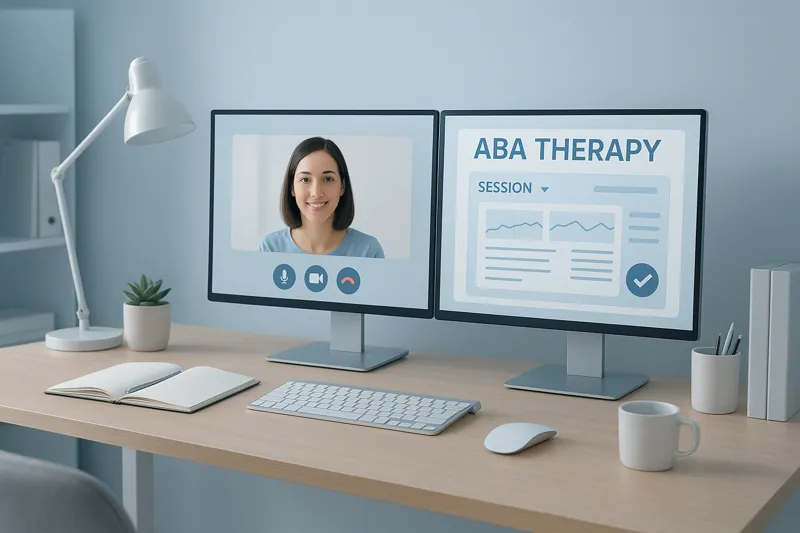
Virtual Applied Behavior Analysis (ABA) therapy, often referred to as telehealth ABA, is the delivery of ABA services through secure online platforms such as video conferencing. This approach enables children with autism spectrum disorder (ASD) and other developmental challenges to receive behavioral therapy remotely, interacting in real-time with qualified therapists.
Adoption and Context
The rise of telehealth in ABA began to accelerate notably during the COVID-19 pandemic, which urged providers to find safe, effective alternatives to in-person sessions. Since then, virtual ABA has maintained its critical role, especially for families in rural or underserved areas where access to in-person ABA services is limited. This shift leverages technology to overcome geographic and logistical barriers that traditionally hindered therapy.
Importance in Today’s Healthcare Landscape
Virtual ABA therapy is highly relevant today as it combines accessibility with proven effectiveness. Studies confirm that telehealth ABA can reduce challenging behaviors and improve skills in language, socialization, and daily living. It supports active parental involvement and integrates into children's natural home environments, fostering skill generalization. With over 90% of U.S. homes having internet access, virtual ABA offers a convenient, flexible, and inclusive option that complements traditional therapy and addresses the growing demand for autism interventions.
Effectiveness and Outcomes of Virtual ABA Therapy

How effective is virtual ABA therapy compared to traditional in-person therapy?
Research consistently shows that Virtual ABA Therapy is highly effective and comparable to in-person services. Numerous studies reveal that children receiving Telehealth ABA therapy benefits experience similar growth in Language and socialization growth in telehealth ABA and adaptive behaviors as those attending in-person therapy. Notably, Telehealth in ABA therapy has demonstrated over 90% reduction in challenging behaviors, affirming its capacity to achieve significant behavioral improvements.
What behavioral and developmental outcomes can be expected from virtual ABA therapy?
Virtual ABA therapy fosters mastery and long-term retention of targeted skills. It effectively supports skill development in core domains such as communication, social interactions, and adaptive daily living skills. Furthermore, skills gained through Telehealth ABA Therapy benefits generalize well to natural environments, including the home, enhancing real-world application and functional independence.
How does parent and caregiver involvement enhance therapy results?
An essential feature of Virtual ABA therapy is the active participation of parents and caregivers. Through real-time coaching and guidance, caregivers learn to implement strategies consistently, which empowers families and strengthens skill generalization. This partnership between therapists and families helps maintain continuity of care and reinforces positive behaviors beyond therapy sessions.
What contributes to the generalization and retention of skills in natural settings?
ABA Therapy Telehealth Guide within the child's familiar home environment allows skills to be practiced and reinforced in everyday routines. This naturalistic approach enhances the relevance and sustainability of learned behaviors. Additionally, digital data tracking and session recordings enable therapists and caregivers to monitor progress and adjust interventions for optimal retention and skill maintenance.
Opportunities Presented by Virtual ABA Therapy

What opportunities does virtual ABA therapy provide to families and children?
Virtual ABA therapy breaks down geographical barriers, significantly increasing access for families in rural and underserved areas who may otherwise struggle to find quality Applied Behavior Analysis (ABA) services. By delivering therapy in the child's natural home environment, it reduces the need for travel, which not only cuts costs but also makes scheduling more manageable for busy families.
Using efficient video conferencing platforms and interactive digital tools, telehealth ABA incorporates advancements such as AI and virtual reality in ABA therapy, and specialized apps. These innovations help to keep children engaged and motivated during sessions, making therapy both effective and enjoyable.
A core strength of virtual ABA is the empowerment of parents and caregivers. Through real-time coaching and active involvement, parents learn to implement strategies consistently, which enhances skill retention and promotes generalization of behaviors beyond therapy time.
How does telehealth ABA therapy improve service delivery during crises like the COVID-19 pandemic?
Telehealth ABA ensures continuity of care by providing remote access to assessments, treatment planning, supervision, and intervention even during health emergencies. Without exposing families and therapists to risk, services continue uninterrupted, preserving developmental gains.
Flexible scheduling inherent in virtual therapy allows sessions to fit around family routines, while the home setting offers a familiar, comfortable space that can reduce anxiety and improve participation for the child.
Overall, virtual ABA therapy expands availability, reduces logistical burdens, enhances engagement tools in virtual ABA sessions through technology, and fosters a collaborative, empowered approach involving families—offering a highly adaptable and effective solution for delivering autism support across varied circumstances.
Challenges and Limitations of Virtual ABA Therapy

What are the common challenges encountered in virtual ABA therapy?
Virtual ABA Therapy faces several challenges that can impact its overall effectiveness. Technical difficulties such as unstable internet connections, device malfunctions, and user inexperience with digital platforms frequently disrupt sessions. Maintaining child engagement, particularly with young children or individuals with severe autism spectrum disorder (ASD), is difficult due to limited hands-on interaction and the virtual environment. Privacy and confidentiality are critical concerns, requiring the use of HIPAA-compliant Virtual Assessment platforms to protect sensitive client information. Moreover, caregiver involvement in telehealth ABA depends heavily on parental or caregiver involvement, meaning caregivers often need additional training and support to effectively manage and prompt behaviors during sessions.
How do technology and engagement limitations affect virtual ABA therapy?
Technology used in telehealth ABA limitations, including connectivity issues and hardware problems, can cause interruptions that reduce the continuity and quality of sessions. These disruptions may hinder the child's learning process and frustrate both therapists and families. Engagement challenges arise because young children or those with more severe ASD may find it hard to focus or interact through a screen without physical cues or support. Therapists often have to employ engagement tools in virtual ABA sessions, such as incorporating visuals, games, and interests tailored to the child, alongside continuous caregiver assistance, to maintain attention and motivation throughout virtual sessions.
Additional challenges include:
- Limited hands-on assistance: Physical prompts or close supervision techniques are difficult to replicate virtually.
- Increased caregiver role: Parents become co-therapists, increasing their responsibility and requiring ongoing parent coaching in virtual ABA.
- Privacy concerns: Ensuring secure, encrypted communications is essential to protect client data using HIPAA-compliant telehealth technology.
Despite these challenges, telehealth ABA therapy remains a valuable and effective modality, especially when best practices for telehealth ABA therapy are followed and families receive adequate support and guidance.
Role of Parents and Caregivers in Virtual ABA Therapy

What is the role of parents during virtual ABA therapy sessions?
Parents act as co-therapists in Virtual ABA Therapy. They play an active role by helping with prompting, reinforcing skills, and managing behaviors during sessions. Their real-time involvement gives therapists valuable insights and helps tailor interventions. This collaboration improves the effectiveness of therapy and supports children in applying learned skills beyond the virtual setting.
How does caregiver involvement influence success in telehealth ABA?
Caregiver participation is crucial for successful Caregiver involvement in telehealth ABA outcomes. When caregivers are consistently involved, they help maintain continuity between sessions and ensure skills are practiced regularly within daily routines. Parent coaching, provided during sessions, equips families to implement strategies effectively, leading to longer-lasting behavioral improvements.
How are caregivers trained to implement strategies and manage behaviors?
Therapists provide caregivers with training and real-time coaching through virtual sessions. This guidance includes teaching behavior management techniques and ways to reinforce positive behaviors at home. Training fosters caregiver confidence and empowers them to support their child's progress actively.
How does caregiver involvement promote skill generalization within natural routines?
By embedding interventions in familiar home contexts, caregivers help children use and maintain skills across different situations. Telehealth enables therapists to observe and coach caregivers in the child's natural environment, which enhances the generalization of learned behaviors into everyday life.
How does consistent caregiver involvement enhance therapeutic outcomes?
Regular engagement of caregivers in Caregiver involvement in telehealth leads to improved skill acquisition, reduced challenging behaviors, and better overall developmental growth. Families benefit from ongoing support and feedback, making therapy more effective and sustainable over time.
Technological Tools and Innovations Enhancing Virtual ABA Therapy
What technologies are commonly used in delivering virtual ABA therapy?
Virtual ABA therapy relies heavily on secure, HIPAA-compliant therapy software video conferencing platforms to connect therapists, children, and caregivers remotely. Commonly used tools include Zoom, Google Meet, and Microsoft Teams, which offer robust video and audio capabilities alongside screen sharing features that support interactive sessions.
To boost engagement, therapists incorporate a variety of digital tools such as visuals, online games, and rewards systems tailored to the child's interests. These elements help maintain motivation and encourage active participation throughout the therapy.
Data collection and progress tracking software play a critical role by enabling therapists to monitor skill development and behavioral changes in real time. These tools provide instant feedback and allow for the customization of treatment plans based on precise data analytics.
How are emerging technologies expected to influence the future of virtual ABA therapy?
Emerging technologies are set to revolutionize virtual ABA therapy by increasing its interactivity and personalization. AI and virtual reality in ABA therapy is being explored to create adaptive learning platforms that adjust activities based on the child's responses, enhancing skill acquisition efficiency.
Virtual reality offers immersive environments that can simulate social scenarios for practicing communication and social skills safely and engagingly. These innovations are expected to expand the range and depth of therapeutic options available virtually, making therapy more accessible and effective for diverse needs.
Together, these technologies promise a future where virtual ABA therapy can closely mimic the benefits of in-person treatment while offering unique advantages fostered by digital innovation.
Hybrid Models Combining Virtual and In-Person ABA Therapy
What is the role of hybrid models in ABA therapy?
Hybrid ABA therapy models blend virtual telehealth sessions with periodic in-person visits. This approach leverages the convenience and accessibility of remote therapy while maintaining the benefits of direct, hands-on intervention. Families enjoy the flexibility of scheduling and reduced travel with virtual sessions, complemented by face-to-face sessions that allow therapists to provide physical guidance and more nuanced assessments.
Why might some skills require in-person ABA therapy instead of virtual approaches?
Certain skills, especially those involving physical assistance, complex behavior management, or sensory integration, require direct contact between therapist and child. These interventions are difficult to replicate fully via a screen and thus necessitate periodic in-person sessions for effective teaching and skill acquisition.
Balancing convenience and personal interaction
Hybrid models strike a balance between virtual ease and meaningful, personal therapeutic interaction. They allow therapists to observe and guide in the child’s natural home environment while preserving opportunities for hands-on techniques crucial for certain goals.
Benefits of combining hands-on techniques with telehealth coaching
This combination maximizes caregiver involvement, with therapists coaching parents during virtual sessions and reinforcing strategies during in-person visits. It supports skill generalization across settings and encourages family empowerment.
Emerging trends and acceptance of hybrid approaches in ABA
Increasingly, hybrid ABA therapy is recognized as a promising model. Organizations and families are embracing it for its flexibility, cost-effectiveness, and ability to tailor therapy according to individual needs and circumstances, creating a comprehensive and adaptable treatment framework.
Future Directions and Policy Support for Virtual ABA Therapy
What does the future hold for virtual ABA therapy in the United States?
The future of virtual ABA therapy in the United States looks promising, with several factors driving its expansion. Increased insurance reimbursements and legislative support are making telehealth a standard option for ABA services. Technological advances, including AI and virtual reality in ABA therapy, are expected to enhance interactive and personalized therapy experiences. Virtual models allow better scalability to meet rising service demands, especially in underserved rural areas. This growth is bolstered by the integration of Telehealth ABA Therapy benefits, combining remote sessions with in-person visits when necessary.
How is policy influencing the adoption of virtual ABA therapy?
Policy and insurance mandates play vital roles in accelerating telehealth adoption. State and federal insurance laws now increasingly cover virtual ABA therapy solutions, reducing financial barriers for families across the country. Healthcare policies encourage the use of telehealth to improve equity in service access by overcoming geographical and logistical challenges. This regulatory environment supports sustainable models, including remote supervision of therapists by Board Certified Behavior Analysts (BCBAs), addressing provider shortages. These policies ensure that high quality Virtual ABA therapy is accessible, affordable, and maintained as a reimbursable service.
Additional Considerations for the Future
Ongoing research consistently validates Virtual ABA therapy, showing comparable outcomes to traditional therapy with notable reductions in challenging behaviors. Cost savings from reduced travel and flexible scheduling enable providers to expand services efficiently. As demand for ABA therapy grows, particularly in the United States, ABA Therapy for Autism provides essential capacity. They empower families, integrate parent coaching, and foster skill generalization in home environments—elements critical for lasting developmental progress.
In summary, policy support combined with Telehealth ABA therapy benefits and clinical research firmly positions Virtual ABA therapy as a sustainable, scalable, and effective treatment path forward for autism care in the U.S.
Conclusion: Virtual ABA Therapy's Transformative Potential and Ongoing Challenges
Virtual ABA therapy has revolutionized access to autism care by making evidence-based Applied Behavior Analysis services more convenient, affordable, and widely available.
Delivering therapy remotely allows children to learn skills in their natural environments, supports caregiver involvement through real-time coaching, and ensures continuity during disruptions such as the COVID-19 pandemic.
Extensive research confirms that virtual ABA achieves behavioral improvements and skill development comparable to in-person methods, including significant reductions in challenging behaviors and gains in language, social, and adaptive skills.
However, challenges remain, including reliance on stable technology, limited hands-on interaction, and potential engagement difficulties—especially with very young children.
Mitigating these hurdles involves thorough caregiver training, use of engaging digital tools, and the growing adoption of hybrid models that blend virtual and in-person sessions for optimal support.
Ongoing innovations like artificial intelligence and virtual reality are poised to enhance therapy personalization and interactivity, increasing future effectiveness.
Empowering parents and caregivers remains central, as their active participation strengthens skill generalization and long-term retention.
Looking ahead, virtual ABA therapy is set to become an integral part of autism treatment, addressing geographic and logistical barriers while complementing traditional care to improve outcomes across diverse populations in the United States.