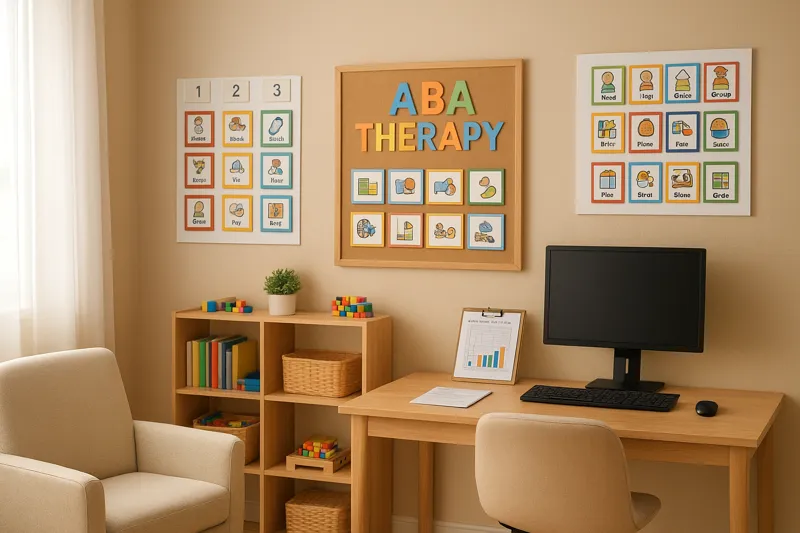

Introduction to ABA Therapy and Its Importance
What is ABA Therapy?
Applied Behavior Analysis (ABA) therapy is a scientifically validated approach based on the science of learning and behavior. It aims to understand how behavior works and how environmental factors influence it. ABA therapy's main goal is to increase helpful behaviors and decrease harmful or disruptive behaviors through targeted, evidence-based strategies.
Who Benefits from ABA?
ABA therapy primarily supports children with autism spectrum disorder (ASD) and related developmental challenges. However, its principles extend to individuals with other behavioral or developmental disorders. Tailored interventions are designed following detailed assessments to address each child's unique profile, making ABA highly individualized.
Core Principles of ABA
ABA operates on several foundational principles:
- Reinforcement: Encouraging positive behaviors by rewarding them, increasing the likelihood they'll be repeated.
- Prompting and Shaping: Guiding desired behaviors step-by-step until the child can perform them independently.
- Functional Behavior Assessment: Identifying environmental triggers and consequences that influence behaviors.
- Data-Driven Adjustments: Continuous data collection to monitor progress and adapt therapy accordingly.
These principles enable ABA to flexibly address behavioral challenges while promoting communication, social skills, independence, and overall growth.
Foundations and Principles of ABA Therapy
What is the science behind ABA and its history since the 1960s?
Applied Behavior Analysis (ABA) is a science of learning and behavior therapy rooted in the study of learning and behavior. Since the 1960s, ABA methods have been used primarily to help children with autism and developmental disorders by understanding behavior-environment relationships. This research-based approach supports meaningful improvement in social, communication, and daily living skills.
What is the Antecedent-Behavior-Consequence (ABC) framework?
The Antecedent-Behavior-Consequence (ABC) framework is fundamental in ABA therapy. It analyzes behavior by examining what happens before it (Antecedent), the behavior itself (Behavior), and what follows it (Consequence). This model guides therapists to understand behavior triggers and outcomes, allowing for targeted interventions that encourage positive behaviors while reducing undesired ones.
How do positive and negative reinforcement influence behavior modification?
Reinforcement strategies in ABA play a central role in behavior change. Positive reinforcement in ABA involves providing rewards—such as praise, toys, or preferred activities—after a desired behavior to increase its likelihood. Negative reinforcement explained encourages behavior by removing an unpleasant stimulus when the desired response occurs. Both methods are essential in encouraging skill development and reducing challenging behaviors.
How is data collection and continuous assessment used in ABA?
Data collection in ABA is critical in ABA therapy, allowing ongoing measurement of a child’s progress. Techniques like real-time observation, event recording, and electronic data tracking for ABA help therapists evaluate the effectiveness of interventions. Continuous assessment ensures that treatment plans remain tailored ABA interventions, with short-term goals adjusted regularly and long-term objectives reviewed approximately every six months.
Tailored Interventions and Techniques in ABA Therapy
How is treatment personalized by Behavior Analysts?
Individualized treatment planning is a cornerstone of ABA therapy, crafted and supervised by Board Certified Behavior Analysts (BCBAs).
These experts conduct detailed assessments to understand a child's unique abilities, preferences, and family environment.
Based on this, they develop targeted goals focusing on communication, social skills, self-care, play, and academic achievements.
The plans are responsive and adaptable, adjusting as progress is tracked through ongoing data collection.
What are some key ABA techniques used?
- Discrete Trial Training (DTT): A structured, one-on-one teaching method that breaks skills into small, manageable steps.
- Natural Environment Training (NET): Teaching skills within the child's normal settings, such as home or community, to promote real-life application.
- Modeling: Demonstrating desired behaviors for children to imitate.
- Prompting and Fading: Initially guiding a child toward a correct response and gradually reducing assistance to build independence.
- Positive Reinforcement: Rewarding desired behaviors to increase their frequency through praise, toys, or privileges.
How are behaviors assessed and skills taught?
Behavioral assessments, such as functional behavior assessments, identify causes of challenging behaviors.
Skill acquisition is often achieved using techniques including task analysis which breaks complex activities into smaller steps, and behavior chaining, teaching these steps sequentially.
This systematic approach ensures that learning is structured and manageable.
How does ABA promote skill generalization?
ABA emphasizes generalization, helping children apply learned behaviors and skills across different settings and people.
By practicing skills in multiple environments and using consistent reinforcement strategies, children gain flexibility and independence in their behaviors.
| Aspect | Details | Importance |
|---|---|---|
| Individualized Planning | BCBA-assessed personalized goals | Maximizes effectiveness and engagement |
| Discrete Trial Training (DTT) | Structured step-by-step skill teaching | Builds foundational skills systematically |
| Natural Environment Training (NET) | Real-world skill application | Enhances practical and functional learning |
| Prompting & Fading | Gradual independence support | Encourages self-sufficiency |
| Positive Reinforcement | Rewarding desired behaviors | Increases behavior repetition |
| Behavioral Assessments | Root cause analysis of behavior | Tailors interventions effectively |
| Task Analysis & Behavior Chaining | Breaking down and sequencing skills | Simplifies complex skills |
| Generalization Techniques | Applying skills across settings | Promotes long-lasting independence |
Supporting Communication and Social Development Through ABA
How Does ABA Enhance Communication Skills?
ABA therapy significantly boosts both verbal and non-verbal communication abilities in children, especially those with autism spectrum disorder. Techniques like the Picture Exchange Communication System (PECS) allow non-verbal children to express their needs and preferences visually. ABA also teaches verbal skills such as vocabulary usage, sentence formation, and eye contact through structured and repetitive learning opportunities.
What Techniques Support Social Skills Development?
ABA employs methods such as social scripts and role-playing to help children practice and understand social interactions. These tools teach children how to interpret social cues, respond to others' emotions, and engage in turn-taking, sharing, and initiating conversations. Such practice fosters meaningful peer interactions and helps children navigate social environments with greater ease.
How Is Speech and Occupational Therapy Integrated with ABA?
Combining ABA with speech therapy enhances language development by addressing both communication and social skills comprehensively. Occupational therapy complements ABA by improving fine motor skills and sensory processing, which support effective social engagement and communication. Such integrated approaches promote holistic development tailored to each child's needs.
ABA's focused strategies in communication and social interaction provide a strong foundation for children to build essential skills, leading to improved relationships and greater independence.
Addressing and Managing Challenging Behaviors
How Does Functional Behavioral Assessment Help Identify Triggers?
Functional Behavioral Assessments (FBAs) are essential tools in ABA therapy to pinpoint the specific triggers and causes of challenging behaviors in children. By observing the Antecedent-Behavior-Consequence (ABC) approach, therapists analyze what happens before and after behaviors to understand their purpose. This insight enables the development of tailored ABA interventions that address the root cause rather than just the symptoms.
What Strategies Are Used to Reduce Harmful Behaviors?
ABA therapy employs several strategies to reduce harmful behaviors effectively:
- Redirection: Shifting the child's attention from the problem behavior to a positive alternative.
- Extinction: Gradually eliminating the reinforcement that maintains the unwanted behavior, carefully avoiding adverse effects.
- Differential Reinforcement: Reinforcing desirable behaviors while withholding reinforcement for negative ones to encourage positive change.
How Are Coping Mechanisms and Emotional Regulation Taught?
Therapists use individualized strategies in ABA therapy to teach children coping skills and emotional regulation. These include step-by-step instruction, role-playing, and reinforcement techniques that promote self-regulation and appropriate responses to emotional triggers.
Why Is Data Monitoring Important in Behavior Intervention?
Continuous data collection in ABA therapy sessions allows professionals to monitor progress and adjust behavior intervention plans accordingly. This ensures that strategies remain effective and are tailored to the child’s evolving needs, enhancing the likelihood of long-term behavioral improvement.
Promoting Independence and Daily Living Skills
How Does ABA Therapy Teach Self-Care and Daily Living Skills?
ABA therapy systematically supports children in learning vital self-care tasks, including dressing, feeding, toileting, and maintaining hygiene. Therapists use techniques like task analysis and behavior chaining, which break down each complex skill into smaller, manageable steps. This step-by-step process helps children master each component sequentially, making challenging tasks more accessible and less overwhelming.
What Techniques Are Used to Facilitate Learning These Skills?
Task analysis simplifies intricate routines by dividing them into clear, teachable parts, such as breaking 'getting dressed' into selecting clothes, putting on a shirt, and fastening buttons. Behavior chaining then sequences these discrete skills, teaching the child to perform steps in order, gradually building full task competence. Therapists often use reinforcement strategies in ABA to encourage completion of each step, and prompting paired with fading techniques to promote independence.
How Does ABA Encourage Self-Regulation and Routine Adherence?
ABA therapy also fosters self-regulation by helping children recognize and manage their emotions and behaviors through consistent routines and coping strategies. Structured daily schedules and repetitive practice strengthen adherence, while positive reinforcement in ABA motivates children to follow routines such as hygiene and mealtime procedures. These methods build predictable habits, reducing behavioral challenges and promoting autonomy.
What Are the Long-Term Benefits of ABA in Building Independence?
Long-term engagement in ABA therapy enhances independence by equipping children with essential daily living skills and self-management abilities. This increased autonomy improves their quality of life improvements with ABA, enabling greater participation in home, school, and community activities. Developing these skills early can reduce reliance on caregivers and prepare children for future success in social and vocational settings.
Family Involvement and Home-Based ABA Therapy
What is the role of parents and caregivers in reinforcing ABA skills at home?
Parents and caregivers play a critical role in reinforcing ABA therapy techniques skills outside of formal sessions. By collaborating closely with therapists, they help maintain consistency, which is essential for generalized learning. Parental involvement includes practicing communication skills in ABA therapy, social skill development, and daily living skills during everyday routines, creating a supportive environment to promote positive behavior.
What ABA techniques can be implemented in naturalistic settings?
ABA strategies employed at home often include natural environment teaching (NET), where skills are taught through everyday activities and play. Techniques such as prompting, positive reinforcement in ABA, imitation games, and modeling are adapted for family use, helping children learn in comfortable, familiar surroundings.
What are the benefits of home-based ABA therapy?
Home-based ABA therapy offers several advantages:
Convenience: Reduces travel and integrates therapy into daily life.
Generalization: Teaches children to apply skills across environments.
Improved family dynamics: Increases positive interactions and understanding among family members. For more on this, see ABA therapy at home benefits and what to expect.
How are parents trained to provide consistent reinforcement and behavior management?
Qualified therapists train parents through coaching and guidance on ABA therapy techniques. They teach parents how to use reinforcements like praise or tangible rewards, recognize antecedents and consequences of behaviors, and apply behavior management strategies consistently. This empowers families to sustain progress and foster meaningful growth.
| Aspect | Description | Benefits |
|---|---|---|
| Parental Role | Reinforce skills, consistency | Enhanced generalization |
| Techniques at Home | Natural Environment Teaching, prompting | Practical skill application |
| Home-Based Therapy Benefits | Convenient, promotes generalization, improves family relationships | Increased therapy success |
| Parent Training | Coaching on ABA strategies and reinforcement | Empowerment and sustainability |
Evidence and Outcomes of Intensive ABA Therapy
What Research Supports ABA as an Evidence-Based Best Practice?
Applied Behavior Analysis (ABA) therapy is recognized by prominent organizations such as the US Surgeon General and the American Psychological Association as an evidence-based best practice. Over 20 peer-reviewed studies have consistently demonstrated ABA's effectiveness in improving communication, intellectual functioning, social skills, and daily living abilities for children with autism spectrum disorder (ASD).
What is the Impact of Intensive, Long-Term ABA Therapy?
Intensive ABA therapy typically involves 25 to 40 hours per week over 1 to 3 years. Research shows this intensive approach leads to significant developmental gains including:
- Enhanced intellectual functioning such as improved memory and problem-solving
- Better communication and language use, including verbal and nonverbal skills
- Increased social engagement and improved ability to interpret social cues
- Reduction in behavioral issues through functional assessments and individualized interventions
- Growth in independence with daily living skills such as dressing and feeding
Such long-term therapy supports sustainable and measurable behavioral improvements across multiple domains critical to a child's success.
How Does Insurance Coverage Affect Access to ABA Services in the US?
In the United States, many private health insurance plans and Medicaid programs offer coverage for ABA, particularly when prescribed as medically necessary. However, coverage varies by state and plan. Families often consult healthcare providers and insurance to find the most appropriate and affordable ABA services. Choosing qualified Board Certified Behavior Analysts (BCBAs) and engaging in a thorough evaluation process helps optimize therapy outcomes within available coverage.
What Success Stories Highlight Measurable Progress in ABA Therapy?
Success stories abound where children receiving intensive ABA therapy show marked improvements in social behaviors, communication abilities, and academic skills. For example, children have learned to initiate conversations, reduce meltdowns, and complete daily routines independently. Continuous data collection and progress monitoring during therapy sessions enable behavioral adjustments that drive these positive results, reinforcing ABA's status as a transformative intervention for children with autism.
| Aspect | Description | Notes |
|---|---|---|
| Evidence-Based Status | Supported by US Surgeon General, APA, and numerous studies | Recognized nationally and internationally |
| Intensive Therapy Benefits | Gains in intellectual, social, communication, and adaptive skills | Typically 25-40 hours/week for 1-3 years |
| Insurance Considerations | Coverage through Medicaid, private insurance varies by state | Requires medical necessity documentation |
| Measurable Progress | Documented improvements documented via data collection and individual assessments | Enables personalized, evolving treatment |
This evidence highlights how sustained, evidence-supported ABA therapy offers real, measurable benefits for children with autism spectrum disorder, enhancing their quality of life and developmental trajectory.
Conclusion: Long-Term Benefits and Future Directions of ABA Therapy
ABA therapy offers comprehensive support for behavioral growth by focusing on increasing positive behaviors and reducing challenges through personalized programs.
It employs data-driven strategies and continuous progress tracking, ensuring interventions are tailored to each child's unique needs.
Family involvement remains central, empowering caregivers to reinforce skills consistently across environments, enhancing therapy outcomes.
Starting ABA early and partnering with qualified professionals such as Board Certified Behavior Analysts maximizes developmental gains.
As research advances, ABA continues to evolve, promising further improvements in communication, social interaction, independence, and quality of life for children with autism and developmental disorders.