
Understanding the Uniqueness of ABA Therapy
The Importance of Individualized ABA Therapy
ABA therapy is uniquely designed to address each child's specific needs, strengths, and challenges. This individualized approach ensures that therapy goals are meaningful and aligned with the child's developmental stage and family priorities. By tailoring interventions, therapists can focus on improving communication, social skills, adaptive behaviors, and reducing challenging behaviors, which leads to more effective outcomes.
The Foundation of ABA in Behavior Science
ABA, or Applied Behavior Analysis, is grounded in the science of behavior. It uses principles such as operant conditioning, where behaviors are influenced by their consequences through reinforcement or modification. Techniques like positive reinforcement and discrete trial training make ABA a highly effective method for promoting desired behaviors and skill development.
Using Assessments to Tailor Therapy
Personalized ABA therapy begins with comprehensive assessments conducted by Board Certified Behavior Analysts (BCBAs). These assessments include observations, interviews, and standardized tools to understand a child's behaviors, learning styles, and preferences. This data-driven process allows practitioners to develop custom treatment plans and interventions that evolve as the child grows, ensuring continuous progress and adaptability.
Comprehensive Assessments: The Cornerstone of Personalization

What is the Role of Board Certified Behavior Analysts (BCBAs) in ABA Therapy Assessments?
Board Certified Behavior Analysts (BCBAs) are essential professionals in ABA therapy. They lead the assessment process to create Personalized ABA Therapy plans. BCBAs conduct thorough evaluations of children to identify their unique needs, strengths, and challenges. Their expertise ensures that interventions are tailored effectively and ethically, following best practices.
What Methods are Used in Comprehensive Assessments in ABA?
ABA assessments utilize multiple methods for a full understanding of the child. These include:
- Observations across settings to see behavior in natural contexts.
- Caregiver Interviews in ABA to gather detailed developmental histories and Family Priorities in ABA.
- Standardized Tools to objectively measure skills and behaviors.
- Functional Behavioral Assessments (FBAs) to analyze specific challenging behaviors by identifying their functions, such as seeking attention or avoiding tasks.
What Do ABA Assessments Identify?
Through these methods, ABA assessments capture:
- Strengths: Skills and abilities that the child already possesses.
- Challenges: Areas where the child requires support or intervention.
- Behaviors: Both positive and problematic behaviors, including their triggers and consequences.
- Environmental Factors: External elements influencing the child’s behavior such as home or school settings.
This extensive information guides the creation of Individualized ABA Therapy plans that adapt to the evolving needs of the child and family, maximizing effectiveness and promoting positive outcomes.
Tailoring Goals for Meaningful Progress

What is the development process for individualized SMART goals in ABA therapy?
ABA therapy begins goal-setting with thorough assessments conducted by Board Certified Behavior Analysts (BCBAs), involving observations, caregiver interviews, and standardized tools. These assessments help understand the child’s strengths, challenges, and interests. From this foundation, therapists develop individualized SMART goals—goals that are Specific, Measurable, Achievable, Relevant, and Time-bound. This clarity enables clear progress tracking and focused interventions.
How are goals aligned with the child's developmental stage, family priorities, and interests?
Goals are carefully tailored to match the child’s developmental stage considerations in ABA, ensuring they are suitable and attainable. Family priorities in ABA also play a crucial role in shaping these goals, incorporating what matters most to the child’s home environment and culture. Additionally, the child’s personal interests—such as favorite toys or themes—are integrated into goal planning to enhance engagement and motivation. For example, a child interested in dinosaurs may have activities themed around this interest to encourage participation.
What focus areas do personalized goals typically include?
Personalized ABA goals target several critical areas for developmental growth:
- Communication: Improving communication skills in ABA—verbal and non-verbal skills to enhance interaction and expression.
- Social Skills: Building abilities such as turn-taking, eye contact, and play interaction through social skills focus in ABA and social skills training methods.
- Adaptive Behaviors: Teaching daily living skills like dressing, hygiene, and routines to foster independence, an aspect of adaptive behaviors in ABA.
- Reducing Challenging Behaviors: Identifying and decreasing behaviors that impede learning or social integration through functional behavior assessments (FBA) and replacement strategies as part of reducing challenging behaviors.
By focusing on these areas with goals tailored to each child's context, ABA therapy fosters meaningful progress that supports the child’s overall quality of life.
Customized ABA Techniques and Learning Styles
Use of Discrete Trial Training (DTT), Natural Environment Teaching (NET), Functional Communication Training (FCT), and Other ABA Methods
ABA therapy techniques includes various techniques customized to a child’s needs. Discrete Trial Training (DTT) breaks down skills into manageable steps reinforced with immediate rewards, helping teach foundational behaviors. Natural Environment Teaching (NET) focuses on learning during everyday interactions and activities, promoting generalization of skills. Functional Communication Training (FCT) replaces challenging behaviors with effective communication methods like gestures, verbal phrases, or picture systems. Other strategies include modeling, prompting, and pivotal response training (PRT), each adapted based on the child's individual strengths and challenges.
Adapting Strategies to Visual, Auditory, and Kinesthetic Learners
Children learn best when customizing ABA therapy goals methods align with their preferred learning style. Visual learning strategies benefit from using picture schedules, charts, and visual aids to enhance understanding and retention. Auditory learning techniques respond well to verbal instructions, songs, and conversations that reinforce concepts through sound. Kinesthetic learning methods engage more effectively with hands-on activities, movement, and physical interaction during therapy sessions. Customizing ABA strategies to incorporate these learning styles increases engagement, motivation, and progress.
Incorporation of Reinforcers Tailored to Motivation and Preferences
ABA therapy uses positive reinforcement to encourage desired behaviors. Reinforcers are individually selected according to a child's motivation and preferences, such as favorite toys, praise, activities, or snacks. Customized ABA therapy plans ensure that the child remains motivated and responsive during sessions. Therapists continuously assess which rewards are most effective and adjust plans to maintain interest and maximize learning outcomes.
| ABA Technique | Description | Adaptation for Learning Style |
|---|---|---|
| Discrete Trial Training (DTT) | Skill-building through repetitive, reinforced trials | Use visual cues or verbal prompts per learner style |
| Natural Environment Teaching (NET) | Learning in everyday settings | Incorporate real-life activities matching child's preferences |
| Functional Communication Training (FCT) | Teaching appropriate communication to reduce problem behaviors | Tailor communication mode: pictures, signs, or speech |
| Reinforcers | Positive rewards to encourage behaviors | Individualized based on child’s motivation and interests |
Data-Driven Adaptation and Continuous Monitoring
Why Is Ongoing Data Collection Important in ABA Therapy?
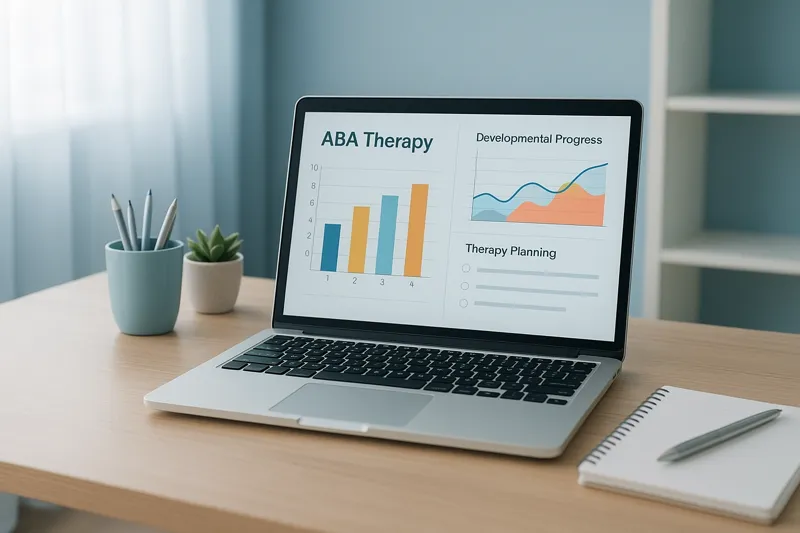
ABA therapy relies heavily on continuous data collection in ABA to ensure interventions remain effective and aligned with a child’s evolving needs. Consistent tracking of behaviors and skill progress allows therapists to make informed decisions, adapting strategies in real time for optimal outcomes.
How Is Data Used to Track Progress and Make Adjustments?
Therapists systematically collect data on target behaviors and responses, analyzing it to assess how well current interventions are working. This data-driven ABA therapy adjustments informs necessary changes, such as modifying goals, refining teaching methods, or selecting new reinforcement strategies tailored to the child’s preferences and developmental stage.
How Are ABA Programs Regularly Reviewed and Modified?
Regular reviews, often conducted every six months or as needed, involve reassessing goals and strategies in collaboration with families and professionals. This ensures therapy stays relevant, addressing new challenges and developmental milestones. ABA behavior plan development are updated based on functional behavior assessments (FBA) and ongoing analysis, supporting sustained progress and adapting to growth.
Continuous data collection in ABA creates a dynamic process that fosters personalized support, improves engagement, and maximizes the effectiveness of interventions for each child.
Family Involvement: A Vital Component
How are parents and caregivers trained and engaged in ABA strategies?
Family involvement in ABA therapy, with therapists actively training parents and caregivers in effective ABA therapy techniques. This training empowers families to implement strategies such as positive reinforcement in ABA, prompting, modeling, and consistent rule enforcement in daily routines. Parent-implemented Intervention (PII) provide practical ways for caregivers to support their child’s progress in natural settings like the home. This engagement helps ensure therapy goals extend beyond sessions, fostering consistent learning and skill reinforcement.
How do families help reinforce skills beyond therapy sessions?
Parents and caregivers play a crucial role by reinforcing learned behaviors outside formal therapy hours. They learn to apply strategies tailored to their child's needs, such as using visual schedules for autism, communication tools, and behavior plans. Consistent reinforcement at home and in community settings enhances generalization of skills and promotes adaptability. Through regular collaboration with therapists, families receive feedback and adjust approaches to maintain therapeutic momentum.
How do cultural and family priorities influence ABA therapy customization?
ABA programs integrate family values, cultural practices, and unique priorities to make therapy relevant and respectful. Therapists collaborate with families to set meaningful goals aligned with their lifestyle and cultural background. For example, incorporating family routines or language preferences into interventions ensures higher engagement and better outcomes. This personalized focus fosters trust and empowers families to actively participate in their child's developmental journey.
Naturalistic and Home-Based Settings Enhance Effectiveness
Delivering Therapy in Familiar Environments to Reduce Anxiety and Promote Generalization
ABA therapy is most effective when conducted in settings that are comfortable and familiar to the child, such as their home. Familiar surroundings help reduce anxiety often caused by new or clinical environments, allowing children to engage more naturally and confidently in therapy sessions. Furthermore, therapy delivered in a natural environment supports the generalization of learned skills, enabling children to apply behaviors across different situations in their everyday life.
Benefits of In-Home ABA therapy
In-home ABA therapy offers several advantages. It provides personalized ABA interventions tailored around the child's lifestyle and daily routines, increasing relevance and engagement. Family involvement in ABA therapy benefits families from direct involvement and hands-on training, empowering caregivers to reinforce skills consistently throughout the day. Therapy in the home reduces stress by eliminating the need for travel and helps address real-life challenges in situ, enhancing the practicality and immediacy of behavioral interventions.
Use of Visual Supports Tailored to the Child’s Understanding
Visual aids, such as picture schedules and social stories, are commonly incorporated into ABA therapy in home and naturalistic settings. These tools are customized to fit the child’s comprehension level and learning style, aiding in communication and reducing anxiety related to transitions or new activities. By providing clear visual cues, they promote independence and consistency, helping children anticipate routines and understand expectations clearly.
Addressing Challenging Behaviors with Individualized Behavior Plans
Conducting Functional Behavioral Assessments to Determine Behavior Functions
Effective Applied Behavior Analysis (ABA) for children with Autism Spectrum Disorder begins with identifying challenging behaviors and understanding their purpose through Functional Behavior Assessments (FBA). During an FBA, therapists observe and analyze behaviors to determine the triggers and functions—such as seeking attention, escaping tasks, accessing tangible rewards, or sensory stimulation—that maintain these behaviors.
Developing Behavior Intervention Plans Using Antecedent Modifications, Replacement Behaviors, and Consequence Adjustments
Based on FBA findings, therapists develop tailored behavior intervention plans. These plans include antecedent modifications, which adjust environments or routines to prevent triggers. Teaching replacement behaviors provides children with appropriate ways to fulfill the same needs served by the challenging behavior. Consequence adjustments reinforce positive behaviors by changing how responses to behaviors are managed, such as offering praise or other rewards.
Ongoing Review and Adaptation of Behavior Plans
Behavior plans are not static; they require continuous data collection in ABA. Therapists analyze progress regularly, adapting strategies to meet the evolving needs of the child. This dynamic approach ensures interventions remain effective, relevant, and responsive to developmental changes.
This cycle of assessment, customized ABA interventions, and reflection forms the foundation of personalized ABA therapy aimed at reducing challenging behaviors and improving overall outcomes.
Incorporating Technology and Innovations to Personalize Therapy
How Are Emerging Technologies Like AI, AR, and VR Used in ABA Therapy?
Emerging technologies such as artificial intelligence (AI), augmented reality (AR), and virtual reality (VR) are increasingly being integrated into Personalized ABA Therapy. These tools enable therapists to create more engaging, interactive, and tailored experiences that cater to each child's unique preferences and developmental needs. AI can analyze data to personalize interventions, while AR and VR provide immersive environments that simulate real-world social situations safely and repeatedly.
How Can Interactive and Adaptive Technologies Enhance Engagement?
Interactive and adaptive technologies make therapy sessions more dynamic and fun, helping maintain a child's attention and motivation. For example, VR can immerse a child in simulated social scenarios, promoting natural communication and social skills practice. Adaptive software programs adjust difficulty levels in real time based on the child's responses, ensuring that learning tasks are appropriately challenging and rewarding.
What Are Some Examples of Technology Tailored to Children’s Preferences and Developmental Levels?
- AI-driven apps that track progress and suggest personalized learning activities based on data trends.
- VR social skills training modules that allow children to practice conversational skills in custom scenarios.
- Augmented reality games that use visual cues to teach communication or motor skills.
- Visual schedules and social stories delivered via tablets to support Visual Learning in Therapy.
- Interactive communication boards adapted with preferred images or sounds to assist nonverbal children.
These technology-based interventions complement traditional ABA therapy techniques and are often delivered in home settings, making therapy more accessible and relevant to everyday environments.
The Power of Personalized ABA Therapy: Empowering Children and Families
Personalization Unlocks Each Child's Potential
ABA therapy is designed around the unique strengths, challenges, and interests of each child. This tailored approach ensures goals focus on meaningful skills—communication, social interaction, adaptive behaviors—and work effectively to reduce challenging behaviors. Personalization increases engagement by aligning therapy with a child's preferences and natural environment, promoting faster learning and better outcomes.
Adaptive, Data-Driven, and Family-Centered Care
Central to personalized ABA is continuous data collection and analysis. Therapists monitor progress closely to adjust techniques and goals promptly, making therapy dynamic and responsive. Family involvement is vital: parents and caregivers receive training to reinforce skills and strategies at home, fostering consistency across settings and empowering families as partners in therapy.
Evolving Therapy for Lifelong Success
Children develop and change, so ABA programs are regularly revisited and updated to address new needs and developmental stages. This ongoing evolution keeps therapy relevant, maximizing benefits over time and supporting children's independence and quality of life. Through personalization, ABA therapy becomes a powerful tool that grows with the child and family, ensuring sustainable progress and meaningful growth.