
Introduction to ABA Therapy and Its Impact on Social Development
What Is ABA Therapy?
Applied Behavior Analysis (ABA) therapy is a scientifically supported approach designed to understand and improve behavior, especially in children with autism spectrum disorder (ASD). It focuses on teaching new skills, increasing positive behaviors, and reducing challenging ones by analyzing the relationship between behavior and the environment.
A Brief History and Foundation
ABA therapy has been in use since the 1960s, grounded in behaviorist principles. Its core strategy is positive reinforcement: rewarding desired behaviors to encourage their repetition. Customized programs are developed by trained professionals, such as Board Certified Behavior Analysts (BCBAs), who tailor interventions to each child's unique needs.
Emphasizing Social Skills and Peer Interaction
One of the primary goals of ABA therapy is to improve social functioning. It targets abilities like eye contact, verbal and non-verbal communication, turn-taking, sharing, and understanding social cues. Structured group activities and peer-mediated interventions create opportunities for children to practice and generalize social skills in natural settings. These peer interactions foster friendships, boost confidence, and promote greater social inclusion, significantly enriching children's lives and aiding their development toward independence.
Foundations of ABA Therapy and Individualized Social Skill Development
What is ABA Therapy and How Did It Originate?
Applied Behavior Analysis (ABA) overview therapy is a scientifically backed method developed in the 1960s to understand and influence behavior. It focuses on teaching new skills and enhancing positive behaviors while reducing negative ones, particularly in children with autism spectrum disorder (ASD).
How is ABA Tailored to Each Child?
ABA programs are customized by qualified professionals, typically Board Certified Behavior Analysts (BCBAs). These specialists assess each child’s unique strengths and challenges to develop individualized treatment plans.
What Techniques Does ABA Use to Encourage Learning?
A primary strategy in ABA is positive reinforcement — rewarding desired behaviors to encourage their repetition. Additionally, ABA uses behavior analysis methods such as the ABC model (Antecedent, Behavior, Consequence) to understand and improve behavior patterns.
Where is ABA Therapy Delivered?
ABA therapy is flexible and implemented across various environments, including homes, schools, clinics, and community settings. This varied approach supports skill generalization, ensuring children apply what they learn in real-world situations.
By individualizing interventions and using evidence-based techniques, ABA therapy effectively supports social skill development and overall behavioral improvements in children with autism.
Enhancing Social Competence Through Peer Interaction in ABA Therapy
What is the Role of Peer Interactions within ABA Therapy?
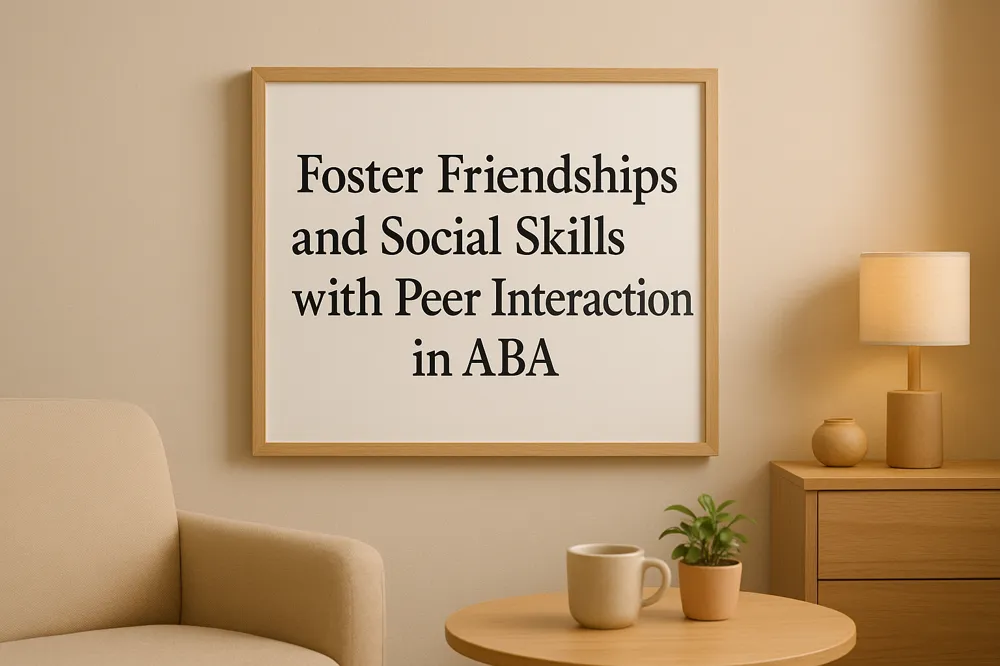
Peer interactions in ABA therapy are fundamental in ABA therapy, providing authentic social experiences that enable children with autism to practice and develop essential social skills. By engaging with peers, children learn to interpret social cues, improve communication, and build empathy. These interactions also reduce social isolation and foster meaningful relationships, boosting self-esteem and overall well-being.
How do Structured Group Activities Support Social Skill Practice?
Group ABA therapy offers a structured setting where children can practice social behaviors like turn-taking, sharing, and responding to social cues. Activities such as cooperative games and group discussions mimic real-life social situations, allowing children to generalize learned skills across settings like home, school, and community. This structured environment encourages positive peer interaction and peer learning.
What Techniques Does ABA Use to Foster Peer Interaction?
ABA therapy employs various techniques to enhance social competence, including:
- Role-playing: Simulates social scenarios in a controlled and supportive setting.
- Modeling: Demonstrates appropriate social behaviors for children to imitate.
- Social Stories: Personalized narratives that help children understand expectations and social norms.
- Video Modeling: Uses videos to showcase correct social interactions and cues.
These strategies break complex social skills into manageable steps, boosting communication and social engagement.
How Effective are Peer-Mediated Interventions?
Peer-mediated interventions involve training typically developing peers to serve as social models and facilitators. This approach promotes naturalistic social learning, enhancing social responsiveness and friendship development. Research shows these interventions lead to increased social initiations, reciprocal interaction, and improved social inclusion, with lasting benefits in real-world contexts.
These focused efforts within ABA therapy create a comprehensive framework for children with autism to develop social competence, leading to improved social integration and emotional well-being.
Intensive and Early ABA Interventions: Long-Term Benefits on Peer Skills

What is the intensity and duration of ABA programs?
ABA therapy overview typically involves intensive interventions that range from 25 to 40 hours per week, sustained over 1 to 3 years. This level of commitment, administered by trained professionals in individualized settings such as homes, schools, and clinics, ensures that children with autism receive comprehensive support tailored to their unique developmental needs.
How do long-lasting improvements manifest in intellectual and social functioning?
Research consistently shows that intensive ABA programs lead to significant and durable gains. Children make substantial improvements in intellectual functioning, language development, daily living skills, and notably, social skills. These improvements endure beyond the therapy period, enabling children to better engage with peers and generalize their social skills across environments.
Why is early intervention important for peer interaction skills?
Starting early and intensive ABA benefits at an early age, often between 2 to 3 years old, enhances the therapy's effectiveness. Early and intensive interventions capitalize on critical developmental windows, allowing children to develop foundational peer interaction skills such as eye contact, turn-taking, sharing, and understanding social cues. This early foundation supports lasting social integration and emotional well-being.
What evidence supports these findings?
The landmark UCLA Young Autism Project results demonstrated that approximately 47% of children receiving early intensive ABA therapy achieved typical intellectual and educational functioning, a striking contrast to just 2% in control groups. Supporting studies further confirm that early, sustained ABA interventions produce enduring benefits in social competence, including peer interactions, communication, and adaptive behaviors.
Together, these findings highlight that Tailored ABA therapy are pivotal in promoting long-term peer skills, contributing to greater independence, confidence, and social inclusion for children with autism.
Group ABA Therapy: Fostering Natural Peer Interactions in Social Settings
How is group ABA therapy structured and what benefits does it offer?
Group ABA therapy is facilitated by trained therapists who lead children with autism through structured activities aimed at promoting social skills development and peer interaction in ABA. Sessions typically begin with warm-up exercises followed by targeted social skills practices like role-playing and cooperative games. This setting mimics real-life social scenarios, providing a safe, natural environment for children to practice and generalize newly learned behaviors.
Benefits include increased communication, social confidence, reduced isolation, and enhanced ability to navigate social norms. By engaging with peers, children learn to make eye contact, initiate conversations, and respond to social cues, all of which contribute to meaningful relationships.
What social skills are commonly targeted in group ABA sessions?
Group ABA sessions focus on a range of social competencies such as:
- Making and maintaining eye contact
- Initiating and sustaining conversations
- Sharing and turn-taking
- Interpreting and responding to social cues
- Understanding social norms and rules
These skills help children develop independence and better adapt to school and community environments.
How do cooperative games and social exercises support social development?
Cooperative games and role-playing in ABA therapy activities encourage collaboration, turn-taking, and problem-solving among peers. These interactive tasks are designed to engage children actively and motivate participation. Through modeling and reinforcement, children learn appropriate behaviors and practice them in a fun, low-pressure setting. This hands-on approach aids in generalizing social skills beyond therapy.
How are children transitioned from individual therapy to group ABA settings?
Children who show progress in individual ABA therapy for children with autism and demonstrate basic social and communication skills are often introduced to group ABA therapy to further enhance peer interactions. This transition is carefully managed by therapists who tailor group activities according to each child's abilities and needs, ensuring comfort and success in social participation.
| Aspect | Description | Outcome |
|---|---|---|
| Structure | Warm-ups, targeted social exercises, games | Safe practice space mimicking real-life situations |
| Social Skills Targeted | Eye contact, conversation, sharing, cues | Improved communication and social norms understanding |
| Activities | Role-playing, cooperative games | Increased engagement, motivation, and peer collaboration |
| Transition Approach | Gradual introduction after individual therapy | Smooth integration into group settings, skill generalization |
Community-Based ABA and Generalization of Social Skills

Why is practicing skills in natural environments important?
Practicing social skills in natural environments is crucial because it promotes better generalization of social skills in natural settings and maintenance of learned abilities beyond clinical settings. Children with autism benefit from real-world practice, which helps them apply social behaviors effectively in everyday situations.
What community settings are often used for ABA therapy?
Community-based ABA therapy commonly takes place in locations such as playgrounds, sports practices, and after-school clubs. These familiar social settings provide children with opportunities to engage with peers and practice skills like communication, turn-taking, and understanding social cues in authentic contexts.
How are peers involved as social models?
Peers are trained as social models and facilitators to encourage naturalistic social exchanges and friendships. This peer-mediated interventions in ABA leverages social learning theory principles such as imitation, reinforcement, and modeling to enhance children's social responsiveness and skill acquisition.
Why is collaboration important in community-based ABA?
Collaboration among families and professionals in ABA is vital for reinforcing social skills consistently across home, school, and community environments. This teamwork ensures skill generalization and supports sustained social competence, inclusion, and emotional well-being for children with autism.
ABA Techniques and Tools Supporting Peer Interaction and Communication
What Are Discrete Trial Training and Natural Environment Teaching?
Discrete Trial Training (DTT) in ABA therapy for social skills is a structured ABA strategies for children with autism approach that teaches skills through clear, repetitive steps using prompts and reinforcement. It focuses on breaking down tasks into smaller, manageable parts, allowing children with autism to learn social and communication skills systematically.
Natural Environment Teaching (NET) methods complements DTT by encouraging learning in everyday settings such as home, school, or playgrounds. NET helps children practice peer interaction in ABA therapy in natural contexts, promoting skill generalization beyond therapy sessions.
How Do Social Stories, Video Modeling, and Prompting Support Social Skills?
Social stories for teaching social behavior provide personalized narratives that illustrate expected social behaviors and situations, helping children understand and anticipate social interactions.
Video modeling for social skills uses recorded demonstrations of appropriate behaviors for children to observe and imitate, improving their comprehension of social cues and responses.
Prompting offers cues or hints during interactions, guiding children to perform desired social behaviors. Reinforcement through praise or rewards strengthens these behaviors, boosting confidence in peer communication. These techniques are integral to ABA strategies to promote social skills.
What Communication Methods Are Used for Non-Verbal Children?
Augmentative communication methods such as the Picture Exchange Communication System (PECS) and augmentative and alternative communication (AAC) devices support non-verbal children to express themselves.
These tools enable children to initiate interactions, request items, or share ideas effectively, facilitating their participation in peer interaction in ABA therapy and enhancing social inclusion.
How Does Task Analysis Facilitate Learning Complex Social Behaviors?
Task analysis breaks complex social skills—like initiating greetings or turn-taking—into smaller, teachable steps.
This approach helps children master each component sequentially, making skill acquisition more achievable and less overwhelming.
By mastering these simplified steps, children gradually develop fluent social behaviors essential for meaningful peer interactions and communication as supported by ABA therapy for social skills development.
Role of Families, Caregivers, and Specialists in Sustaining Social Gains
How do families and caregivers contribute to reinforcing social skills?
Families and caregivers play an essential role in reinforcing the social skills children learn during ABA therapy for children with autism. By consistently practicing targeted behaviors at home and in community settings, they help generalize skills beyond clinical sessions. Encouraging children to use social skills like turn-taking, greetings, and sharing in everyday interactions supports their independence and confidence, which aligns with strategies discussed in social skills training in autism intervention.
Why is collaboration among therapists, educators, and families vital?
Effective ABA therapy requires collaboration among Board-certified Behavior Analysts (BCBAs), therapists, educators, and family members. This teamwork ensures that interventions are consistent across settings such as home, school, and therapy clinics. Regular communication allows professionals to tailor strategies and update goals based on the child's evolving needs, fostering more cohesive and sustained social development, as highlighted in collaboration in ABA therapy.
What roles do qualified professionals fill in ABA therapy?
Qualified specialists like Board-certified Behavior Analysts (BCBAs) design and oversee individualized ABA programs. Registered Behavior Technicians (RBTs) often implement these programs under BCBA supervision. Their expertise ensures that interventions use evidence-based techniques such as positive reinforcement in ABA, prompting, and peer-mediated interventions in ABA appropriately, maximizing the child's social skill acquisition and generalization.
How is consistency across environments maintained?
Maintaining consistency is achieved through coordinated efforts between families and professionals, using shared goals and communication tools. Techniques are integrated into ABA in daily routines, allowing children to practice and receive reinforcement both during therapy and in real-life contexts. This continuity reduces confusion and promotes lasting social gains, consistent with practices outlined in ABA integration in educational settings.
The combined involvement of families, caregivers, and a multidisciplinary team ensures sustained progress, helping children with autism confidently navigate social settings and build meaningful peer relationships by fostering building meaningful relationships in ABA and promoting social skills development in children with autism.
Broader Impacts of ABA-Enhanced Peer Interaction Skills on Well-being and Inclusion
How does ABA therapy improve self-esteem and reduce anxiety in children with autism?
ABA therapy for children with autism enhances Peer interaction in autism which can significantly boost self-esteem by helping children feel more competent and confident in social situations. Structured peer activities in ABA therapy foster positive social experiences, reducing feelings of isolation and social anxiety. As children learn to initiate conversations, interpret social cues, and share with peers, they experience success that reinforces their self-worth and emotional well-being.
In what ways does ABA support the development of friendships and social independence?
ABA therapy for autism uses targeted social skills training, Role-playing in ABA therapy, and Peer social groups in ABA therapy to give children opportunities to build Building friendships through peer activities. Through Positive reinforcement in ABA and naturalistic teaching, children practice and maintain social behaviors that help them initiate and sustain relationships. Developing cooperative play and communication skills leads to greater social independence and helps reduce reliance on adults in peer interactions.
How does ABA therapy contribute to inclusion in academic and community settings?
By integrating community-based ABA therapy into real-life contexts such as schools and community activities, ABA promotes skill generalization beyond therapy. Family involvement and collaboration with educators ensure that skills like turn-taking and conflict resolution are reinforced consistently. Peer interaction in ABA therapy facilitated by ABA help children with autism join Group ABA therapy, access extracurriculars, and engage socially at school or community events, fostering inclusion.
What is the long-term contribution of ABA-enhanced peer interactions to social competence and quality of life?
Long-term ABA interventions promote sustained social gains that support lifelong social competence. Enhanced communication, empathy, and problem-solving skills empower individuals to navigate social environments effectively. Improved Peer interactions in ABA therapy contribute to emotional well-being, reducing social isolation and enhancing overall quality of life. These benefits align with broader goals of community integration and personal growth for children with autism.
Conclusion: Empowering Social Integration Through ABA Therapy
ABA Therapy: A Foundation for Building Peer Interaction Skills
ABA therapy has proven to be a powerful tool in fostering social skills and peer interactions for children with autism. Its evidence-based, individualized approach supports children in developing essential social competencies such as eye contact, communication, turn-taking, and conflict resolution.
Early, Intensive, and Customized Interventions Make the Difference
Timely and intensive ABA programs, often involving 25 to 40 hours per week over several years, maximize outcomes by targeting each child's unique needs. Tailored strategies and ongoing adjustments ensure effective progress and help children generalize skills across settings.
A Team Approach Enhances and Sustains Social Success
Collaborative efforts between certified behavior analysts, therapists, educators, families, and peers create a consistent and supportive environment. This teamwork is vital for reinforcing learned skills and maintaining confidence, reducing social anxiety, and fostering friendships.
Looking Forward: Lifelong Growth and Inclusion
ABA therapy not only boosts immediate social abilities but also lays the groundwork for ongoing personal growth and community participation. By equipping children with lasting social tools, ABA supports their journey toward independence, acceptance, and meaningful social integration.