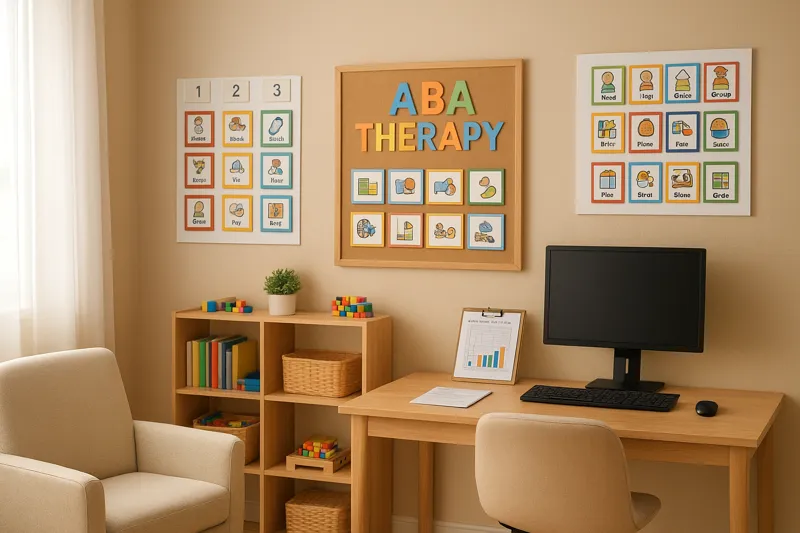

Introduction to the Growing Importance of ABA Therapy
Science-Based Approach to Behavior
Applied Behavior Analysis (ABA) therapy is a research-driven treatment rooted in the science of learning and behavior. It focuses on understanding how behaviors develop and how positive changes can be encouraged through systematic techniques like positive reinforcement.
Rising Demand and Widespread Recognition
There is an increasing demand for ABA therapy professionals across the United States, fueled by a rise in autism diagnoses. This trend is supported by projections from the U.S. Bureau of Labor Statistics indicating robust job growth in behavioral health fields. ABA is widely recognized as the gold standard treatment for autism by major health organizations, including the U.S. Surgeon General and the American Psychological Association.
The Value of Early Intervention
Starting ABA therapy early, often before age four, leverages brain plasticity to encourage significant developmental gains in communication, social skills, and independence. Research shows that intensive and personalized ABA interventions improve outcomes such as language development and adaptive functioning.
These factors collectively emphasize the vital role ABA therapy plays in supporting children with autism and highlight its expanding importance in the healthcare landscape.
Key Facts List: Benefits of ABA Therapy for Children with Autism
- ABA therapy enhances communication skills by employing diverse modalities like speech, sign language, and AAC devices.
- It actively develops social skills such as eye contact, turn-taking, sharing, and initiation of conversations.
- ABA helps in reducing challenging behaviors like tantrums and aggression by identifying triggers and reinforcing functionally appropriate behaviors.
- It promotes independence by teaching children daily living skills like dressing, grooming, and toileting, fostering personal autonomy.
- ABA supports academic and cognitive growth through structured, tailored techniques and visual aids for task comprehension.
- It aids in emotional regulation by teaching children to recognize feelings and practice coping strategies such as deep breathing.
- ABA therapy produces long-term positive outcomes including improved cognition, language, and adaptive behaviors with early, intensive intervention.
- Early ABA intervention is crucial due to brain plasticity, leading to greater developmental gains and behavioral improvements.
- Family training is an essential part of ABA, empowering caregivers to reinforce strategies at home and support continued progress.
- Research confirms that personalized ABA plans lead to meaningful improvements in social, communication, and behavioral domains.
1. Significant Improvement in Communication Skills

How does ABA therapy benefit communication in children with autism?
ABA therapy plays a crucial role in enhancing language development with ABA and communication for children with autism. It is not limited to teaching verbal speech but incorporates various communication modalities tailored to each child's abilities and needs.
This therapy employs functional communication methods in ABA including speech, sign language, gestures, and augmentative and alternative communication (AAC) devices. These diverse tools ensure that children can express themselves effectively, reducing the frustration often experienced when communication is challenging.
By helping children develop these communication skills, ABA therapy fosters improved interactions with peers, family members, and educators. This broader communication ability supports social inclusion, learning, and emotional expression.
Moreover, ABA uses positive reinforcement to encourage the use of these communication methods consistently across settings. Its personalized approach allows therapy plans to adapt to a child's strengths and preferences, further supporting meaningful progress.
The result is a reduction in problematic behaviors that stem from communication difficulties, leading to better overall engagement and developmental outcomes for children with autism as shown by research findings on ABA therapy progress.
2. Enhancement of Social Skills and Peer Interaction

What social skills improvements does ABA therapy provide?
ABA therapy actively develops critical social skills such as making eye contact, understanding emotions, taking turns, sharing, and initiating conversations. These foundational skills are essential for meaningful communication and social integration.
Development of eye contact, taking turns, sharing
The therapy promotes these specific skills by engaging children in structured activities where practicing eye contact and waiting for their turn helps build patience and attention. Sharing during play enhances cooperative behaviors and fosters positive peer relationships.
Structured social skill training and play-based learning
ABA uses play-based learning sessions that incorporate social scenarios in a controlled, supportive environment. This method allows children to learn social norms and cues naturally while receiving guidance and positive reinforcement from therapists.
Support for real-world social integration and friendships
Children in ABA programs are encouraged to generalize learned social behaviors beyond therapy sessions into real-world settings like school and community. This support helps build lasting friendships and smooths their transition into social environments, improving overall quality of life.
| Aspect | Description | Benefits |
|---|---|---|
| Eye Contact and Turn-Taking | Practiced through interactive routines | Improves attention and social engagement |
| Play-Based Social Skill Training | Structured but naturalistic learning setting | Encourages sharing, cooperation, and friendship-making |
| Real-World Social Integration | Generalization of skills to daily environments | Facilitates peer friendships and school readiness |
3. Reduction and Management of Challenging Behaviors

How does ABA therapy help in managing challenging behaviors?
ABA therapy is effective in identifying and managing challenging behaviors in children with autism by focusing on the triggers and reasons behind these behaviors. Therapists use detailed assessments to determine what prompts a behavior—often referred to as the antecedent—and then develop strategies that address these triggers directly.
A central approach in ABA is the use of positive reinforcement in ABA, where children are rewarded for displaying alternative, functional behaviors that replace the challenging ones. For example, a child who previously had tantrums to request attention might be taught how to ask verbally or use gestures instead. This shift not only reduces problematic behaviors but also decreases frustration for both the child and their families.
Evidence from studies confirms the effectiveness of ABA therapy in managing challenging behaviors. Research by the Action Behavior Centers (ABC) reported an 86% reduction in behaviors such as tantrums, aggression, and self-injury within one year of therapy. These significant declines improve the child’s safety, social interaction, and overall ability to engage in daily activities.
By focusing on individualized interventions tailored to each child's specific needs and triggers, ABA therapy provides a structured, supportive framework that reduces challenging behaviors and promotes more positive, adaptive ways of functioning.
4. Development of Independence Through Daily Living Skills

In what ways does Increasing independence via ABA therapy?
ABA therapy is instrumental in teaching children with autism essential self-care routines that include dressing, grooming, meal preparation, toileting, and tooth brushing. These practical skills form the foundation of daily living activities that are critical for their personal autonomy.
Teaching self-care routines like dressing, grooming, and meal preparation
Sessions are tailored to break down complex tasks into manageable steps, enabling children to master each element progressively. For example, dressing skills are taught through stepwise guidance, while meal preparation may begin with simple tasks like using utensils or opening containers. This targeted approach ensures children learn functional skills suited to their individual needs.
Promoting autonomy and self-confidence
Learning to perform daily living activities independently boosts children's self-confidence. By gaining competence in managing their personal care, children feel more capable and empowered. This positive reinforcement enhances motivation, encouraging continued skill acquisition and personal growth.
Generalization of skills across various environments
Increasing independence via ABA therapy emphasizes transferring learned skills beyond the therapy setting. Children practice routines in different environments such as home, school, and community to ensure adaptability. This generalization is vital for real-world independence, allowing children to navigate diverse contexts confidently.
Through these personalized and systematic teaching methods, Increasing independence via ABA therapy significantly fosters independence and contributes to improving the overall quality of life for children with autism.
5. Improvement in Academic and Cognitive Abilities

How does ABA therapy support academic growth?
ABA therapy uses structured techniques tailored to each child's unique learning needs. This individualized approach helps children grasp academic concepts by breaking down complex tasks into smaller, manageable steps. Visual aids such as picture cards, charts, and schedules are integrated to support skill acquisition, making learning clearer and more accessible.
Tailored strategies for skill acquisition
By employing positive reinforcement in ABA, ABA therapy encourages children to focus on learning and persist through challenges. The use of discrete trial training and natural environment teaching enables children to practice skills in various settings, which promotes generalization and retention.
Preparing children for school success
ABA therapy emphasizes school readiness by developing attention, following instructions, and cooperative skills that are vital in classroom environments. Social skills improvement through ABA by peer interaction and group activities further supports effective participation and integration in educational settings.
Together, these approaches help children with autism improve cognitive capabilities and academic performance, fostering greater confidence and independence in their educational journey.
6. Emotional Regulation and Coping Skill Development
What role does ABA therapy play in emotional regulation?
ABA therapy assists children with autism in recognizing their emotions and managing their responses effectively. By teaching children to identify feelings such as frustration, anxiety, or excitement, ABA helps build emotional awareness—a foundation for healthy emotional regulation.
Recognizing and managing emotions
Through structured activities and consistent reinforcement, children learn how to label their emotions accurately. This recognition is critical in reducing emotional outbursts and promoting calmer responses.
Teaching calming and coping strategies
ABA therapists implement strategies such as deep breathing, counting, or using sensory tools that children practice to self-soothe when distressed. These coping techniques enable children to control their behaviors and adapt to emotional challenges more effectively.
Application of natural environment training and play therapy for emotional growth
Natural environment training allows children to apply emotional regulation skills in real-life settings, encouraging generalization of calm behaviors beyond therapy sessions. Play therapy is used to simulate social scenarios, teaching children how to navigate emotions during interactions. This hands-on and engaging approach promotes lasting emotional growth and resilience.
Together, these components ensure children develop practical tools to manage their emotions, leading to improved social interactions and a better quality of life.
7. Long-Term Positive Outcomes and Family Empowerment
What are the long-term benefits of ABA therapy for children and their families?
ABA therapy delivers significant lasting improvements in intellectual functioning, language abilities, and adaptive behaviors. Research shows that early and intensive intervention amplifies these positive effects, helping children achieve developmental gains that support greater independence and school readiness.
Sustained Intellectual, Language, and Adaptive Behavior Gains
Intensive ABA therapy benefits —often 25 to 40 hours weekly over multiple years—correlates with improved cognition, communication, and daily living skills. Children who begin therapy early often reach developmental levels comparable to their neurotypical peers, benefiting academically and socially.
Importance of Early and Intensive Intervention
Early ABA intervention leverages the brain's plasticity, making it possible for children to acquire essential life skills and reduce challenging behaviors more effectively. Therapy starting before age 4 with consistent high intensity encourages more meaningful and lasting improvements. See more on Early initiation of ABA therapy.
Inclusion of Family Training and Support
A critical component of ABA is family involvement. Training caregivers equips them to implement ABA strategies at home, sustaining learned behaviors and fostering positive environments. This support reduces parental stress and builds confidence, enabling families to actively contribute to their child's ongoing development and social integration. For comprehensive insights, refer to Family training in ABA therapy.
Conclusion: ABA Therapy’s Vital Role in Autism Support in 2026 and Beyond
ABA Therapy: Transforming Lives
Applied Behavior Analysis (ABA) therapy stands as a scientifically proven approach to support children with autism spectrum disorder (ASD), offering a wide range of benefits. It enhances communication, social skills, and daily living activities while effectively reducing challenging behaviors. These improvements pave the way for greater independence and better integration into academic and social environments.
Importance of Early and Consistent Intervention
Starting ABA early—ideally before age four—with sustained, intensive therapy dramatically increases the chances of developmental gains. Early intervention harnesses the brain's plasticity, promoting lasting improvements in language, cognition, socialization, and adaptive behaviors.
Progress and Growing Accessibility
ABA therapy continues to evolve with advancements in techniques and delivery methods such as telehealth and clinic-based services. This progress, paired with expanded insurance coverage and growing professional demand, increases accessibility for families across the United States.
Empowering Families and Practitioners
Families, caregivers, and professionals are encouraged to embrace ABA therapy as a vital tool. With personalized programs and collaborative support, ABA can significantly improve the quality of life for children with autism and their communities, now and into the future.